There is a particular kind of frustration that comes from watching a live tracking feed go quiet. The last known position shows your shipment somewhere off the coast of Portugal. That was six hours ago. Now there is nothing to show. No update, no alert, no explanation. This is not a rare edge case. It happens regularly, and it happens because most shipping GPS tracking devices are not actually built for multimodal freight. They are built for the road. Or sea. Rarely both, and almost never all four transport modes in a single continuous feed.
Where the Gaps Come From
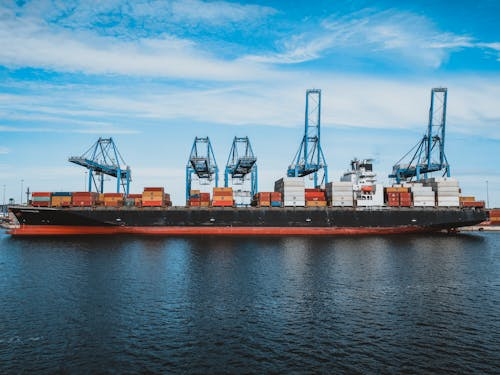
A shipment that moves from a factory in Germany to a distributor in Singapore will have road transport, sea freight, and air transport involved in the journey at some point. Different infrastructure. Different networks. Different conditions of coverage.
A shipping GPS tracking device that works well on a lorry may lose connectivity the moment that cargo moves into a port warehouse, onto a vessel, or into an aircraft hold. The device does not fail. The coverage does. And once coverage drops, the live shipment tracking feed stops updating.
That silence is the gap. And gaps are where problems hide.
Perhaps the frustrating part is that the device looks fine on paper. Battery life checks out. Location accuracy is listed as within a few metres. The spec sheet says nothing about what happens when the cargo transfers from road to sea at 11pm on a Tuesday, with no manual check scheduled until morning.
See also: Router Price in Kenya Guide: From Home Use to Business Networking
Why Gaps Are Expensive
According to the TT Club and the BSI Supply Chain Risk Index 2023, cargo theft and loss are concentrated in transfer points, port dwell times, and times of less scrutiny. These are the times when the GPS tracking device for shipping goes dark due to the lack of network coverage.
The above is the reason why this matters financially.
What Does Continuous Coverage Require
A shipping GPS tracking device that maintains live shipment tracking across all transport modes needs to do a few things that most devices do not.
First, it must have global network coverage that is independent of a single carrier or a single technology standard. While low-powered 5G networks provide a wider international coverage than earlier generations, the device must be designed to access those networks, irrespective of the country or the carrier.
Second, the device must be able to continue logging even when it is unable to transmit. Some devices will stop logging altogether when the device is unable to transmit. However, other devices will continue to log the information from the sensors, syncing the information as soon as the device can transmit again. This is the kind of device you want. It means the gap in your live view is not a gap in the actual data record.
Third, the device needs sensors beyond GPS. Location tells you where the asset is. Temperature, humidity, shock, light, and barometric pressure tell you what is happening to it. If your shipping GPS tracking device only returns coordinates, you are missing the condition data that determines whether your cargo arrives in usable condition.
The Sensor Question Nobody Asks
Most procurement conversations about GPS tracking focus on battery life and subscription cost. The sensor payload tends to come up later, often after an incident where condition data would have changed the outcome.
A pharmaceutical shipment exposed to temperatures above 8 degrees Celsius for more than two hours may be rendered unusable under cold chain protocols set by the European Medicines Agency. But if your tracking device doesn’t record temperature over time, then the violation hasn’t occurred, and you can’t measure when it started.
The same reasoning applies to shock events for fragile electronics, humidity for moisture-sensitive components, and light for tamper-sensitive cargo. Each sensor adds a layer of evidence that either confirms everything went to plan or tells you exactly when it did not.
Choosing a Device That Closes the Gaps
When you evaluate a shipping GPS tracking device, the live shipment tracking capability is only as good as the network coverage behind it and the sensor. And if your device loses signal during a port handover and your cargo is tampered with, diverted, or damaged during that window, you have no data. No timestamps. No condition readings. No location record. Your insurance claim is based on what happened before and after, not during. data alongside it.
Ask whether the device maintains coverage across road, sea, rail, and air without manual reconfiguration at each handover. Ask whether it logs condition data locally during network outages and syncs on reconnection. Ask what happens to your data if the device is not returned after a journey, and whether there is a managed refresh and redeployment process that removes that operational burden from your team.
Those questions will tell you more about whether a device is actually fit for your supply chain than any spec sheet comparison.
The gap in your live shipment tracking feed is not a technical glitch. It is a decision made at the point of device selection. The right device closes that gap.


 By
By