In the high-pressure environment of contemporary American higher education, the pursuit of a 4.0 GPA often comes at a steep psychological cost. Academic burnout is no longer just a “bad week” of studying; it has evolved into a systemic crisis affecting students across Ivy League institutions and state universities alike. As we navigate the 2026 academic landscape, the integration of digital tools and 24/7 connectivity has blurred the lines between rest and rigor, making strategic management of one’s mental bandwidth more critical than ever.
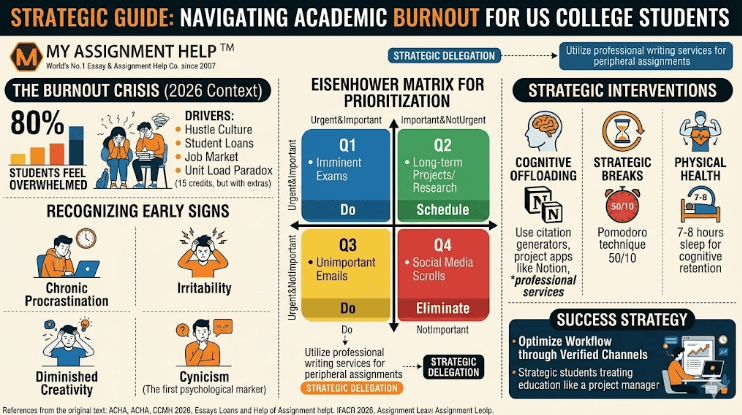
According to recent data from the American College Health Association (ACHA), nearly 80% of students reported feeling overwhelmed by their responsibilities within the last academic year. When the mental fatigue sets in, the urge to simply pay someone to do your essay can be overwhelming for many students; however, leveraging a structured academic support system via MyAssignmentHelp provides a sustainable framework for long-term success without compromising educational integrity. Identifying the early signs of exhaustion—such as chronic procrastination, irritability, and diminished creativity—is the first step in reclaiming your academic career.
The Anatomy of Burnout: Why US Students are Struggling
Burnout in the USA is often driven by the “hustle culture” ingrained in the domestic educational philosophy. Unlike occasional stress, burnout is a state of emotional, physical, and mental exhaustion caused by excessive and prolonged stress. It occurs when you feel overwhelmed, emotionally drained, and unable to meet constant demands. For many, the weight of student loans and the competitive job market in hubs like New York, San Francisco, and Austin creates a “failure is not an option” mentality.
A significant contributor is the “Unit Load” paradox. US institutions typically suggest 15 credits per semester as a standard, yet the supplemental work required for internships and extracurriculars effectively doubles this load. When students reach this breaking point, they often search for professional help to pay for essay assignments, allowing them to focus on core subjects and laboratory work that require their physical presence and active participation.
Strategic Interventions for Heavy Course Loads
1. The Eisenhower Matrix for Academic Prioritization
One of the most effective ways to mitigate burnout is through clinical time management. The Eisenhower Matrix helps students categorize tasks by urgency and importance. By focusing on “Important but Not Urgent” tasks (like long-term research papers), you prevent the “Urgent/Important” fire-fighting that leads to adrenal fatigue.
2. Cognitive Offloading and Outsourcing
Cognitive offloading is a recognized psychological strategy where an individual uses physical actions to reduce the mental effort required for a task. In academia, this translates to using citation generators, project management apps like Notion, or specialized essay help services to manage the mechanical aspects of writing. This allows the student to focus on the “Information Gain”—the unique insights and critical thinking that modern grading rubrics prioritize.
See also: Types of IV Set: A Comprehensive Guide for Healthcare Professionals
Evidence-Based Success in the 2026 Academic Landscape
Maintaining high standards of academic output requires more than just effort; it requires a transparent and credible methodology. Navigating burnout doesn’t mean cutting corners; it means optimizing your workflow through verified channels. Using peer-reviewed databases like JSTOR and ensuring your work reflects personal experience is the best way to ensure high marks in 2026. If you find yourself unable to meet these standards due to exhaustion, consulting with subject matter experts can bridge the gap between your current state and your academic goals.
Key Takeaways
- Early Detection: Monitor for “cynicism” toward your major; it is often the first psychological marker of burnout.
- Strategic Breaks: Implement the Pomodoro technique (50/10) to maintain focus without taxing the prefrontal cortex.
- Resource Utilization: Utilize professional academic writing services to manage peripheral assignments during peak exam seasons.
- Physical Health: Sleep deprivation is the primary accelerator of academic burnout; 7-8 hours is essential for cognitive retention.
Frequently Asked Questions
Q: Is it common for US students to experience burnout by their sophomore year?
Yes. Data suggests that the “Sophomore Slump” is often actually the first major wave of academic burnout as the novelty of college wears off and the complexity of major-specific courses increases.
Q: How can I tell the difference between laziness and burnout?
Laziness is usually a lack of motivation to start. Burnout is a lack of capacity to continue, even when the motivation and desire to succeed are still present.
Q: Does seeking external essay help count as a strategic move?
Absolutely. Strategic students treat their education like a project manager treats a high-stakes campaign—they delegate low-impact tasks to focus on high-impact results.
About the Author
Sarah Miller, Senior Content Strategist Sarah Miller is a veteran academic consultant and Senior Content Strategist at MyAssignmentHelp. With over a decade of experience in US higher education trends, she specializes in helping students navigate complex curriculum requirements while maintaining mental wellness. Her work focuses on high-quality content standards and the ethical integration of academic support services.
References
- American College Health Association (2025). National College Health Assessment.
- Journal of Educational Psychology: “The Impact of Hustle Culture on Cognitive Retention.”
- Center for Collegiate Mental Health (CCMH) 2026 Annual Report.
- Hodder, D. (2025). Quality Content and Trust Standards.
- Varn. (2026). How to write and review SEO content.

 By
By