A slow or dropped connection at the wrong moment costs more than frustration. It costs you a dead line, a strained client call, maybe a sale. That is why picking the right router, and spending the right amount, matters more than most people think.
Router prices in Kenya vary widely. You can spend Ksh 2,500 or Ksh 150,000. Both are routers. But they serve completely different purposes, and buying the wrong one for your situation is a mistake that shows up fast.
Here is a practical breakdown of what you get at each price range.
Budget Routers (Ksh 2,500 – Ksh 6,000)
This range covers basic home use. Think of a one-bedroom apartment, a small studio, or a student house. These are used for light browsing, social media, standard-definition streaming, maybe on two or three devices at any given time. For households in this category, the priority is getting a stable connection without overcomplicating things. You do not need advanced QoS, dual-WAN failover, or tri-band technology. A basic single-band or dual-band unit is enough. When shopping for routers in Kenya at this level, you do not need to spend a lot.
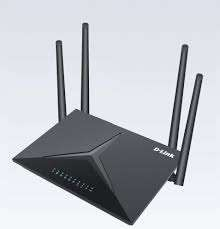
Some of the brands you can expect to see in this category include TP-Link, D-Link, etc., which are the entry-level devices.
What you get:
- Single-band (2.4GHz) connectivity
- Speed of up to 300Mbps on paper, though in practice, it is lower
- Some basic security features
- Range of about 20 to 30 meters
What you do not get is reliability under load. Connect six or seven devices, and you will notice. Perhaps that is fine if it is just one person with a laptop. The moment you add a smart TV, a phone, and a work computer, things slow down noticeably.
Mid-Range Routers (Ksh 7,000 – Ksh 25,000)
This is where things get more practical for most Kenyan households and small offices.
Dual-band routers in this range support both 2.4GHz and 5GHz frequencies. The 5GHz band is faster and less congested, which makes a real difference when multiple people are working or streaming at the same time.
You are looking at brands like TP-Link Archer series, Huawei, and some entry-level Ubiquiti models in this bracket.
What you get:
- Dual-band support (2.4GHz and 5GHz)
- Speeds between 750Mbps and 1200Mbps
- Better range, often 30 to 50 metres
- Guest network options
- More device connections without sharp performance drops
For a small office of five to ten people, this range works reasonably well. Not perfectly, but well enough that most daily tasks run without issue.
Business-Grade Routers (Ksh 30,000 – Ksh 150,000+)
This is where things take a complete turn.
Business environments have different needs. You have to maintain consistent speeds for all your users, support for VLANs (to segregate your network for better security), support for VPNs, and uptime that never falters within office hours.
A budget router failing at home is an inconvenience. A router failing during a company-wide video call or a point-of-sale transaction has a direct, measurable cost.
Brands in this range include Cisco, Ubiquiti (UniFi series), MikroTik, and Fortinet. These are not consumer products. They are designed to operate 24/7 while under load, and they have management tools that enable IT teams to manage and monitor the network.
What you get:
- Multi-band support for higher throughput
- VLAN and QoS settings
- VPN support for remote teams
- Enterprise-grade security features
- Management tools for central control
The price is higher, yes. But poor network infrastructure in a business setting tends to show up in productivity loss, security gaps, and the eventual cost of replacing cheap equipment sooner than you planned.
See also: Premium Villa Deep Cleaning Services Dubai for a Healthier, Brighter Home
What Actually Determines Router Price in Kenya?
A few other things drive the price difference beyond brand names.
Processing Power. More expensive routers have more powerful processors that can manage router traffic more quickly, especially if there are multiple devices connected at once.
Security. Routers sold for business have configurations for firewalls, intrusion detection, and content filtering. Consumer routers do not.
Warranty. A KSh 3,000 router from a local shop may not have any warranty. A Cisco or Ubiquiti router comes with manufacturer support and updates for years.
Number of supported users. This is perhaps the most overlooked factor. Every router has a practical limit on concurrent connections before performance drops. Manufacturers list this, though it is sometimes buried in the spec sheet.
FAQs
Is a more expensive router always better?
Not always. Spending KSh 80,000 on an enterprise router for a two-person home office is unnecessary. Match the router to your actual use case and the number of devices you run daily.
Can a cheap router handle fiber internet in Kenya?
It depends on your plan. A Ksh 3,000 router may technically connect to a fiber line, but it will become the bottleneck. If your fiber plan offers 100Mbps or more, a mid-range or higher router will serve you much better.
What router brands are available in Kenya?
TP-Link, D-Link, Huawei, Ubiquiti, Cisco, MikroTik, and Fortinet are among the options available from ICT distributors and resellers across Nairobi and other major towns.
Do routers in Kenya come with warranties?
This depends on where you buy. Purchasing from an authorized distributor gives you access to manufacturer warranties and after-sales support, which matters more once you are buying business-grade equipment.
Learn more about networking solutions and router options for businesses in Kenya.


 By
By