• Home
  • Business
  • Getting the Most Out of Shoulder Screws in High-Tolerance Applications

Getting the Most Out of Shoulder Screws in High-Tolerance Applications

When an assembly fails due to an improper fastener, the cost is no longer just replacing a component. Time is lost, work needs to be redone, and in some cases, a component can be scrapped, which could have taken hours to machine. Anyone who works in a high-tolerance environment understands this feeling. One bad decision in the fastener selection process can cause a project to be stalled for days. Shoulder screws do not always get the attention they deserve in that conversation. They should. Here is why they matter more than most people think. What Makes a Shoulder Screw Different A shoulder screw has three distinct sections: a head, a smooth cylindrical shoulder, and a threaded end. The shoulder is the key part. It is precision-ground to a tight dimensional tolerance, usually within 0.001 inches or better. That smooth, unthreaded section is what separates it from a standard fastener. Standard screws grip by threading into a material. Shoulder screws work differently. The shoulder acts as a bearing surface, a pivot point, or a precise spacer. The threaded portion only anchors it in place. The shoulder does the actual mechanical work. This distinction matters a lot in assemblies where movement, alignment, or spacing needs to be exact. Where Shoulder Screws Get Used The list of applications is longer than most people expect. Pivot points in jigs and fixtures Linear guides and slide mechanisms Cam followers and linkage assemblies Precision spacing in multi-layer assemblies Hinges in aerospace and defence components Robotic arm joints and actuator mounts What connects these applications is the need for controlled movement or precise positioning. A shoulder screw does not just hold things together. It defines how those things relate to each other spatially. In a jig or fixture, even a 0.01mm shift in a pivot point can throw off the entire operation. A shoulder screw, properly specified, keeps that shift from happening. The Real Risk of Getting It Wrong A lot of engineers substitute a standard bolt with a washer when they need a shoulder screw function. It works, sometimes. But it rarely works consistently. The problem is tolerance stacking. A bolt and washer combination introduces multiple surfaces, each with its own dimensional variation. Over time, and under load, those variations add up. What starts as a minor slip becomes a measurable error. In precision assemblies, that error is the difference between a part that passes inspection and one that does not. There is also wear to think about. A smooth, hardened shoulder resists wear far better than the body of a standard bolt. In pivot applications, this matters. A worn pivot changes the geometry of the assembly. That changes the output. And in industries such as aerospace or medical device assembly, changes in output are not acceptable. The fear is legitimate. Design something precise, specify the wrong fastener, and your tolerances will be gone in a few thousand cycles. Material and Hardness Matter Shoulder screws have several materials from which they're manufactured: Stainless Steel, Alloy Steel, and, in weight-constrained systems, Titanium. Material selection is significant for both performance and environmental considerations. Alloy Steel shoulder screws, designed to either ASTM or DIN specifications, have high tensile strengths. They're good for high-load pivot applications where the shoulder is subject to significant stress. Stainless Steel is good in corrosive environments, but is generally not as hard. That is significant if your assembly is in a wet or chemically active environment. The shoulder hardness is perhaps the most overlooked spec. A harder shoulder resists galling and wear in rotating or oscillating contact. Rockwell C hardness ratings for alloy steel shoulder screws typically range from 38 to 43 HRC, according to manufacturer data from Holo-Krome. If there are repeated movements, shoulder hardness is not optional information. It defines service life. Fit Tolerance and Why It Changes Everything Shoulder screw fit, or the relationship of the screw to the hole it fits into, is where precision either occurs or does not. There are three types of fit that are of concern: Clearance fit: The hole is somewhat larger than the shoulder screw. It allows for free rotation or sliding motion. Transition fit: Slight clearance or interference. It is used for alignment, but motion is necessary. Interference fit: The shoulder is larger than the hole. Used for fixed, non-moving applications. For most pivot and sliding applications, a clearance fit with tight tolerances, typically H7/h6 in ISO terms, gives the right balance of free movement and positional accuracy. The ISO 286 standard outlines these fit classifications in detail. Getting the fit wrong usually means one of two things: too much slop causes positional error, or too much interference creates binding and accelerated wear. To Conclude Shoulder screws are not complex fasteners. The complexity is in matching them correctly to what the application actually demands. Get that part right, and they will hold up for a long time.


When an assembly fails due to an improper fastener, the cost is no longer just replacing a component. Time is lost, work needs to be redone, and in some cases, a component can be scrapped, which could have taken hours to machine. Anyone who works in a high-tolerance environment understands this feeling. One bad decision in the fastener selection process can cause a project to be stalled for days. Shoulder screws do not always get the attention they deserve in that conversation. They should.

Here is why they matter more than most people think.

What Makes a Shoulder Screw Different

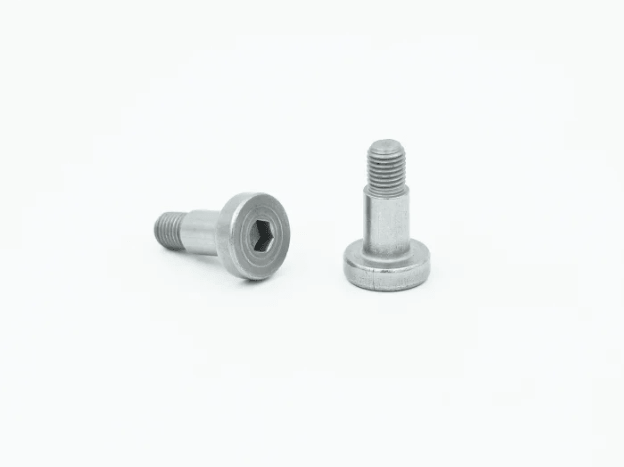
A shoulder screw has three distinct sections: a head, a smooth cylindrical shoulder, and a threaded end. The shoulder is the key part. It is precision-ground to a tight dimensional tolerance, usually within 0.001 inches or better. That smooth, unthreaded section is what separates it from a standard fastener.

Standard screws grip by threading into a material. Shoulder screws work differently. The shoulder acts as a bearing surface, a pivot point, or a precise spacer. The threaded portion only anchors it in place. The shoulder does the actual mechanical work.

This distinction matters a lot in assemblies where movement, alignment, or spacing needs to be exact.

Where Shoulder Screws Get Used

The list of applications is longer than most people expect.

  • Pivot points in jigs and fixtures
  • Linear guides and slide mechanisms
  • Cam followers and linkage assemblies
  • Precision spacing in multi-layer assemblies
  • Hinges in aerospace and defence components
  • Robotic arm joints and actuator mounts

What connects these applications is the need for controlled movement or precise positioning. A shoulder screw does not just hold things together. It defines how those things relate to each other spatially.

In a jig or fixture, even a 0.01mm shift in a pivot point can throw off the entire operation. A shoulder screw, properly specified, keeps that shift from happening.

The Real Risk of Getting It Wrong

A lot of engineers substitute a standard bolt with a washer when they need a shoulder screw function. It works, sometimes. But it rarely works consistently.

The problem is tolerance stacking. A bolt and washer combination introduces multiple surfaces, each with its own dimensional variation. Over time, and under load, those variations add up. What starts as a minor slip becomes a measurable error. In precision assemblies, that error is the difference between a part that passes inspection and one that does not.

There is also wear to think about. A smooth, hardened shoulder resists wear far better than the body of a standard bolt. In pivot applications, this matters. A worn pivot changes the geometry of the assembly. That changes the output. And in industries such as aerospace or medical device assembly, changes in output are not acceptable.

The fear is legitimate. Design something precise, specify the wrong fastener, and your tolerances will be gone in a few thousand cycles.

Material and Hardness Matter 

Shoulder screws have several materials from which they’re manufactured: Stainless Steel, Alloy Steel, and, in weight-constrained systems, Titanium. Material selection is significant for both performance and environmental considerations.

Alloy Steel shoulder screws, designed to either ASTM or DIN specifications, have high tensile strengths. They’re good for high-load pivot applications where the shoulder is subject to significant stress. Stainless Steel is good in corrosive environments, but is generally not as hard. That is significant if your assembly is in a wet or chemically active environment.

The shoulder hardness is perhaps the most overlooked spec. A harder shoulder resists galling and wear in rotating or oscillating contact. Rockwell C hardness ratings for alloy steel shoulder screws typically range from 38 to 43 HRC, according to manufacturer data from Holo-Krome. If there are repeated movements, shoulder hardness is not optional information. It defines service life.

See also: Router Price in Kenya Guide: From Home Use to Business Networking

Fit Tolerance and Why It Changes Everything

Shoulder screw fit, or the relationship of the screw to the hole it fits into, is where precision either occurs or does not.

There are three types of fit that are of concern:

  • Clearance fit: The hole is somewhat larger than the shoulder screw. It allows for free rotation or sliding motion.
  • Transition fit: Slight clearance or interference. It is used for alignment, but motion is necessary.
  • Interference fit: The shoulder is larger than the hole. Used for fixed, non-moving applications.

For most pivot and sliding applications, a clearance fit with tight tolerances, typically H7/h6 in ISO terms, gives the right balance of free movement and positional accuracy. The ISO 286 standard outlines these fit classifications in detail.

Getting the fit wrong usually means one of two things: too much slop causes positional error, or too much interference creates binding and accelerated wear.

To Conclude

Shoulder screws are not complex fasteners. The complexity is in matching them correctly to what the application actually demands. Get that part right, and they will hold up for a long time.

Releated By Post

Hong Kong Serviced Apartment: Comfort and Convenience in the City

For individuals seeking a flexible and luxurious stay in the…

IGCSE Singapore: Preparing Students for Global Academic Success

IGCSE Singapore schools offer internationally recognized secondary education that equips…

Leave a Reply

Your email address will not be published. Required fields are marked *